
MOTHER THERESA INSTITUTE OF ENGINEERING & TECHNOLOGY (UGC-AUTONOMOUS)
NAAC A+, NBA ACCREDITED, RECOGNIZED UNDER SECTION 2(F), AN ISO 9001:2015 CERTIFIED
NAAC A+, NBA ACCREDITED, RECOGNIZED UNDER SECTION 2(F), AN ISO 9001:2015 CERTIFIED

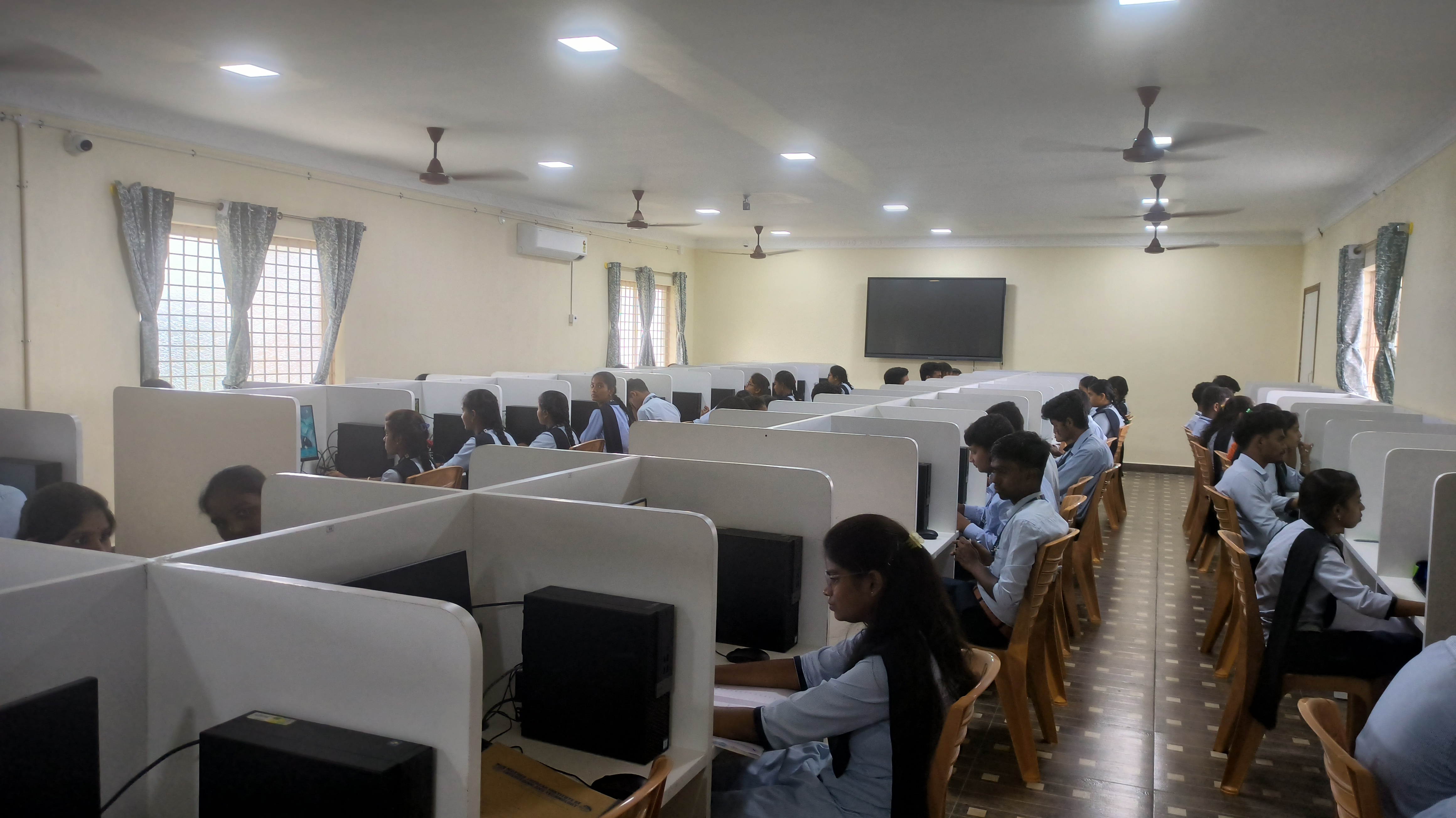
B. Tech. in Artificial Intelligence and Data Science (AI &DS) with intake of 60 started in 2021, offered by the Computer Science and Engineering Department is an undergraduate programme with advanced learning solutions imparting knowledge of advanced innovations like artificial intelligence, data science, machine learning and deep learning. The main goal of artificial intelligence and data science is to program computers to use example data or experience to solve a given problem.
Artificial Intelligence and Data Science is a new, exponentially growing field which consists of a set of tools and techniques used to extract useful information from data. This specialized course is specially designed to enable students to build intelligent machines, software, or applications with a cutting-edge combination of machine learning, analytics and visualization technologies.
This course aims at providing not only the core technologies such as artificial intelligence, data mining and data modeling but also gives intensive inputs in areas of machine learning and big data analytics. By this course, the students will gain cross-disciplinary skills across fields such as statistics, computer science, machine learning, and logic, data scientists and may have career opportunities in healthcare, business, ecommerce, social networking companies, climatology, biotechnology, genetics, and other important areas. The major focus of this programme is to equip students with statistical, mathematical reasoning, machine learning, knowledge discovery, and visualization skills.
To promote quality education with industry collaboration and to enable students with intellectual skills to succeed in a globally competitive environment.
PEO1:- Graduates will have solid basics in Mathematics, Programming, Machine Learning, Artificial Intelligence, and Data Science Fundamentals and Advancements to solve technical problems.
PEO2:- Graduates will have the capability to apply their acquired knowledge and skills to solve issues in real-world Artificial Intelligence and Data Science sectors and to develop feasible and viable systems.
PEO3:- Graduates will have the potential to participate in lifelong learning through professional developments for societal needs with ethical values.
PSO1:- Ability to implement innovative, cost-effective, energy-efficient, and eco-friendly integrated solutions for existing and new applications using Artificial Intelligence and Data Science technologies.
PSO2:- Graduates will possess the additional skills in network security and IT infrastructure in cyberspace.
PSO3:- Develop, test, and maintain software systems for business and other applications that meet the automation needs of society and industry.
PO1:- Engineering Knowledge: Apply the knowledge of mathematics, science, engineering fundamentals, and an engineering specialization to the solution of complex engineering problems.
PO2:- Problem Analysis: Identify, formulate, review research literature, and analyze complex engineering problems reaching substantiated conclusions using first principles of mathematics, natural sciences, and engineering sciences.
PO3:- Design/Development of Solutions: Design solutions for complex engineering problems and design system components or processes that meet the specified needs with appropriate consideration for public health and safety, and cultural, societal, and environmental considerations.
PO4:- Conduct Investigations of Complex Problems: Use research-based knowledge and research methods including design of experiments, analysis and interpretation of data, and synthesis of the information to provide valid conclusions.
PO5:- Modern Tool Usage: Create, select, and apply appropriate techniques, resources, and modern engineering and IT tools including prediction and modeling to complex engineering activities with an understanding of the limitations.
PO6:- The Engineer and Society: Apply reasoning informed by contextual knowledge to assess societal, health, safety, legal and cultural issues and the consequent responsibilities relevant to professional engineering practice.
PO7:- Environment and Sustainability: Understand the impact of professional engineering solutions in societal and environmental contexts, and demonstrate the knowledge of, and need for sustainable development.
PO8:- Ethics: Apply ethical principles and commit to professional ethics, responsibilities, and norms of the engineering practice.
PO9:- Individual and Team Work: Function effectively as an individual, and as a member or leader in diverse teams, and in multidisciplinary settings.
PO10:- Communication: Communicate effectively on complex engineering activities with the engineering community and with society at large, such as, being able to comprehend and write effective reports and design documentation, make effective presentations, and give and receive clear instructions.
PO11:- Project Management and Finance: Demonstrate knowledge and understanding of engineering and management principles and apply these to one’s own work, as a member and leader in a team, to manage projects and in multidisciplinary environments.
PO12:- Life-Long Learning: Recognize the need for, and have the preparation and ability to engage in independent and life-long learning in the broadest context of technological change.

M.E.

M.Tech.

M.Tech., (PhD)

M.Tech.,(PhD)

B.Com
| S.No | Author Name | Title of the Publication | Publisher | ISSN No. | Publication | Attachment |
| 1 | Sekhar, J.C. , Balajee, J. , Godla, S.R. , ... El-Ebiary, Y.A.B. , Kaur, C. | Maximizing Learning Outcomes through Fuzzy Inference System and Graph Theory Based on Learning Analytics | Journal of Advances in Information Technology | 15(6), pp. 784–797 | Article | — |
| 2 | Mittal, P. , Abirami, S.P. , Ramya, P. , Balajee, J. , Muniyandy, E. | Rule Based Mamdani Fuzzy Inference System to Analyze Efficacy of COVID19 Vaccines | EAI Endorsed Transactions on Pervasive Health and Technology | 10 | Article | — |
| S.No | Author Name | Title of the Publication | Publisher | ISSN No. | Publication | Attachment |
| 1 | Kudithi, T. , Balajee, J. , Sivakami, R. , ... Mohan, E. , Guluwadi, S. | Hybridized deep learning goniometry for improved precision in Ehlers-Danlos Syndrome (EDS) evaluation | BMC Medical Informatics and Decision Making | 24(1), 196 | Article | — |
| 2 | Mayee, M.K. , Rebekah, R.D.C. , Deepa, T. , Zion, G.D. , Lokesh, K | Detection of Depression in Social Media Posts using Emotional Intensity Analysis | Engineering, Technology and Applied Science Research | 14(5), pp. 16207–16211 | Article | — |
| S.No | Source Type Specialization | Name | Patent No | |
|---|---|---|---|---|
 CP LAB
 JAVA LAB

| E-Content | Video Link |
|---|---|
| No data found | |