
MOTHER THERESA INSTITUTE OF ENGINEERING & TECHNOLOGY (UGC-AUTONOMOUS)
NAAC A+, NBA ACCREDITED, RECOGNIZED UNDER SECTION 2(F), AN ISO 9001:2015 CERTIFIED
NAAC A+, NBA ACCREDITED, RECOGNIZED UNDER SECTION 2(F), AN ISO 9001:2015 CERTIFIED
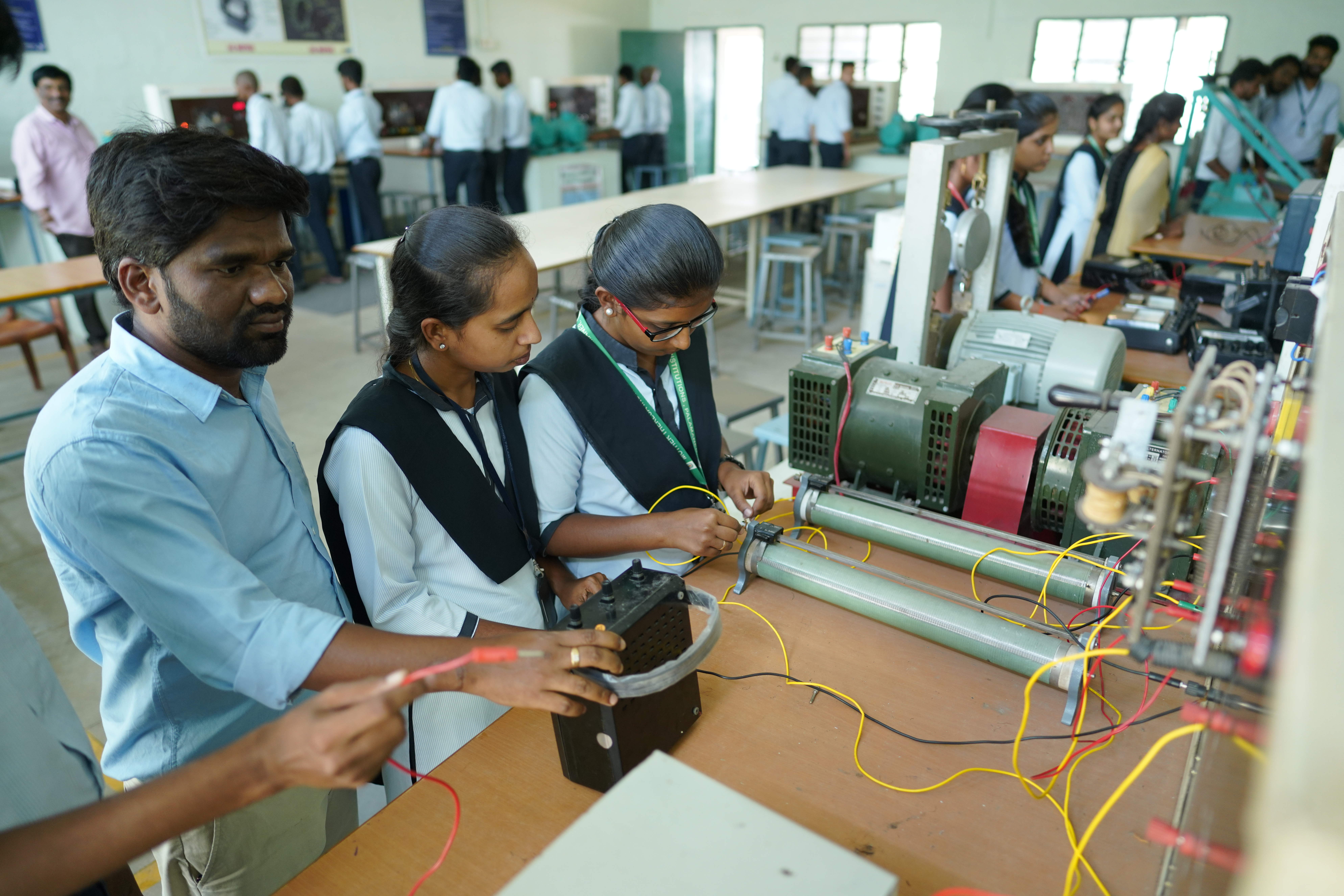
The department of EEE offers premier professional technical training that keeps in pace with the latest developments in the field of Electronics and Electrical Engineering. It offers four year full time B.Tech program in EEE
The Department is facilitated with highly qualified, committed and expert faculty members. As a part of the academic plan, the department is making several plans to conduct International and National conference, FDPs, Guest lectures, Seminars, In plant training, Industrial visit and Internship training for student’s development, organized with industrial collaboration.
The department is endowed with well equipped Laboratories that cater to the standards specified by the Jawaharlal Nehru Technological University, Ananthapuramu as well as to architect the learning experience of Students.
The aim of MTIET is to develop not just top quality engineers but also well developed persons. Our motto therefore is "Sharpening Minds. Brightening Tomorrow" which is the of excellence in a world of high technology.
To produce accomplished Engineers through eminence education and become a recognized center of excellence in academics, research and technological services in the area of Electrical and Electronics Engineering and related inter-disciplinary fields.
PEO1: The graduates will be employed within the engineering field and demonstrate technical competence in providing effective engineering solutions.
PEO2: The graduates will fulfill the needs of society by solving technical problems in an ethical and responsible manner.
PEO3: The graduates will develop self-learning qualities, evidenced through continuous skill development.
PEO4: The graduates will be oriented towards research in Energy Management and the exploration of non-conventional energy sources.
PSO1: The students will possess a strong knowledge to design, develop, and simulate systems using MATLAB and other engineering application software.
PSO2: The students will understand various technologies of Electrical and Electronics Engineering to effectively handle technical issues.
PSO3: The students will be aware of the latest developments in Electrical and Electronics Engineering as well as the machinery used in industries.
PO1: Engineering Knowledge: Apply knowledge of mathematics, science, engineering fundamentals, and an engineering specialization to solve complex engineering problems.
PO2: Problem Analysis: Identify, formulate, review research literature, and analyze complex engineering problems, reaching substantiated conclusions using the first principles of mathematics, natural sciences, and engineering sciences.
PO3: Design/Development of Solutions: Design solutions for complex engineering problems and design system components or processes that meet specified needs, with appropriate consideration for public health and safety, and cultural, societal, and environmental factors.
PO4: Conduct Investigations: Use research-based knowledge and methods, including design of experiments, analysis, and interpretation of data, and synthesis of information to provide valid conclusions.
PO5: Modern Tool Usage: Create, select, and apply appropriate techniques, resources, and modern engineering and IT tools, including prediction and modeling, to complex engineering activities, understanding their limitations.
PO6: Engineer and Society: Apply reasoning informed by contextual knowledge to assess societal, health, safety, legal, and cultural issues and the responsibilities relevant to professional engineering practice.
PO7:Environment and Sustainability: Understand the impact of professional engineering solutions in societal and environmental contexts and demonstrate knowledge of, and the need for, sustainable development.
PO8: Ethics: Apply ethical principles and commit to professional ethics, responsibilities, and norms in engineering practice.
PO9: Individual and Teamwork: Function effectively as an individual and as a member or leader in diverse teams and multidisciplinary settings.
PO10: Communication: Communicate effectively on complex engineering activities with the engineering community and society at large, including the ability to comprehend and write effective reports and design documentation, make effective presentations, and give and receive clear instructions.
PO11: Project Management and Finance: Demonstrate knowledge and understanding of engineering and management principles and apply these to one’s work, as a member and leader in a team, to manage projects and work in multidisciplinary environments.
PO12: Lifelong Learning: Recognize the need for and have the preparation and ability to engage in independent and lifelong learning in the broadest context of technological change.
We at Mother Theresa Institute of Engineering and Technology, endeavor to bring out and encourage the talents and skills of the students through quality technical education. We aim to motivate students to be self-disciplined and develop their competence to face future challenges.

---HOD
test
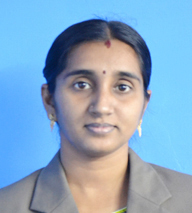
---HOD
Welcome to Department of Electrical & Electronics Engineering was established in 2010. The Department seeks to combine excellence in education with service to the industry. Our vision is to be recognized as excellence in the field of Engineering Education, Research and Consultancy which encompasses knowledge, skills and values to produce technically and intellectually competent and socially committed students to become responsible citizens. As a well-known fact, The Department focus is to train our students to get strong academic knowledge in the frontier areas of both electrical & electronics engineering and also to make the students ready to face real-world challenges.

M.E, Ph.D

M.Tech

M.Tech

M.Tech (PhD)

M.Tech

M.Tech

M.Tech

M.Tech (Ph.D)

Ph.D

M.E, Ph.D

Ph.D

DEEE

I.T.I
| S.No | Student Name | Hall Ticket No | GATE Rank |
| 1 | PRAHALAD A M | 17HR1A0201 | 9761 |
| 2 | M MANOJ VAMSI | 17HR1A0202 | 2395 |
| S.No | Student Name | Hall Ticket No | GATE Rank |
| 1 | M. Harish | 18HR1A0232 | 6800 |
| 2 | PRAHALLAD A M | 17HR1A0201 | 3080 |
| S.No | Source Type Specialization | Name | Patent No | |
|---|---|---|---|---|
 Electrical Circuits Lab
 Power Systems Lab
 Control Systems Lab
 Power Electronics Lab
 Electrical Measurements Lab
 Electrical Machines Lab


