MOTHER THERESA INSTITUTE OF ENGINEERING & TECHNOLOGY (UGC-AUTONOMOUS)
NAAC A+, NBA ACCREDITED, RECOGNIZED UNDER SECTION 2(F), AN ISO 9001:2015 CERTIFIED
NAAC A+, NBA ACCREDITED, RECOGNIZED UNDER SECTION 2(F), AN ISO 9001:2015 CERTIFIED

The Department of Science and Humanities was established in the year 2010 with first year in take 300 Students. The department plays a key role as the students of all disciplines have to go through this entrance. This department is the common entry point for all the students of the under-graduate programs of engineering. The experienced faculty in the department are well acquainted with innovative skills, creativity and dedication to the highest levels of excellence in learning and disseminating the creation of knowledge across widely in all the disciplines like Mathematics, Engineering / Applied Physics, Chemistry Subjects, Environmental sciences with English as language for Communication with Engineering orientation.
To promote excellence in the field of Engineering Education, Research and Consultancy which encompasses knowledge, skills and values to produce technically and intellectually competent and socially committed students to become responsible citizens.
We at Mother Theresa Institute of Engineering and Technology, endeavor to bring out and encourage the talents and skills of students with Quality Technical Education, motivate them to be self-disciplined and develop their competence to face the challenges.
PEO1:- To strengthen the fundamental concepts of Physics, Chemistry, Mathematics and Professional Communication.
PEO2:- To create a strong foundation for further engineering education.
PEO3:- To provide students with a solid foundation in mathematical, scientific and engineering fundamentals required to solve engineering problems and also to pursue higher studies.
PEO4:- To inculcate in students professional and ethical attitude, effective communication skills, team work skills, multidisciplinary approach and an ability to relate engineering issues to broader social context.
PEO5:- To sensitize students to environmental and ethical issues.
PSO1:- Develop the ability to understand, demonstrate, identify, analyze and apply the skills and knowledge gained from foundational courses of humanities, sciences and engineering, and relate these fundamentals with core subjects in the relevant field.
PSO2:- Understand basic skills and principles of engineering by developing and engaging them in life-long learning with effective skills, inculcating quality of reasoning, logic, analysis and communication.
PSO3:- Cultivate the ability to work in teams and learn by participating in technical events and social welfare programs and develop the attitude for working productively as an individual and in cross-disciplinary teams to become better citizens in the multicultural world.
PO1:- Engineering Knowledge: Apply the knowledge of mathematics, science, engineering fundamentals, and an engineering specialization to the solution of complex engineering problems.
PO2:- Problem Analysis: Identify, formulate, review research literature, and analyze complex engineering problems reaching substantiated conclusions using first principles of mathematics, natural sciences, and engineering sciences.
PO3:- Design/Development of Solutions: Design solutions for complex engineering problems and design system components or processes that meet the specified needs with appropriate consideration for public health and safety, and cultural, societal, and environmental considerations.
PO4:- Conduct Investigations of Complex Problems: Use research-based knowledge and research methods including design of experiments, analysis and interpretation of data, and synthesis of the information to provide valid conclusions.
PO5:- Modern Tool Usage: Create, select, and apply appropriate techniques, resources, and modern engineering and IT tools including prediction and modeling to complex engineering activities with an understanding of the limitations.
PO6:- The Engineer and Society: Apply reasoning informed by contextual knowledge to assess societal, health, safety, legal and cultural issues and the consequent responsibilities relevant to professional engineering practice.
PO7:- Environment and Sustainability: Understand the impact of professional engineering solutions in societal and environmental contexts, and demonstrate the knowledge of, and need for sustainable development.
PO8:- Ethics: Apply ethical principles and commit to professional ethics, responsibilities, and norms of the engineering practice.
PO9:- Individual and Team Work: Function effectively as an individual, and as a member or leader in diverse teams, and in multidisciplinary settings.
PO10:- Communication: Communicate effectively on complex engineering activities with the engineering community and with society at large, such as, being able to comprehend and write effective reports and design documentation, make effective presentations, and give and receive clear instructions.
PO11:- Project Management and Finance: Demonstrate knowledge and understanding of engineering and management principles and apply these to one’s own work, as a member and leader in a team, to manage projects and in multidisciplinary environments.
PO12:- Life-Long Learning: Recognize the need for, and have the preparation and ability to engage in independent and life-long learning in the broadest context of technological change.

M.Sc.,

M.Sc.,

M.Sc.,

M.L.I.Sc

M.L.I.Sc

MA.,M.Phil.,Ph.D

M.SC.,

M.Sc., Ph.D

M.Sc.,Ph.D, (POST DOCTORAL FELLOW, SCNU, PR CHINA)

M.Sc, B.Ed.

M.Com., (Ph.D)

M.C.A

M.Sc, B.Ed., Ph.D

M.Sc., (Ph.D)

M.A

M.A

M.B.A

M.Sc.,

M.Sc.,

M.Sc., (Ph.D)

M.Sc.,

M.Sc.,

M.A.,

M.A., B.Ed., (Ph.D)

M.Sc., B.Ed., Ph.D

M.Sc., B.Ed., M.Phil., Ph.D

M.P.Ed

M.P.Ed
| S.No | Student Name | Hall Ticket No | GATE Rank |
| 1 | M. Harish | 18HR1A0232 | 6800 |
| S.No | Author Name | Title of the Publication | Publisher | ISSN No. | Publication | Attachment |
| 1 | Dr C.S. DWARAKA VISWANATH | Near‑infrared and green light emission spectroscopic characteristics of Er3+ doped alumina–phosphate glasses | Springer | 0947-8396 | SCI | — |
| S.No | Author Name | Title of the Publication | Publisher | ISSN No. | Publication | Attachment |
| 1 | Dr.R.CHENNA KRISHNA REDDY | Recent Advances in the Synthesis of Quinoxalines. A Mini Review | Taylor & Francis | 1563-5333 | WEB OF SCIENCE | — |
| 2 | Dr.P.Ramachandra Reddy | The turbulent movement of feminism and feminist poetry in Andhra Pradesh, India | JETIR.org | 2349-5162 | UGC CARE JOURNAL | — |
| 3 | Dr.P.Ramachandra Reddy | Unique Challenges of Teaching English in Multilingual India | IJOES | 2581-8333 | UGC CARE JOURNAL | — |
| 4 | Dr.P.Ramachandra Reddy | Transformative Engineering Education through Microteaching Practices | IJRAR.ORG | 2348-1269 | UGC CARE JOURNAL | — |
| 5 | Dr.P.Ramachandra Reddy | Apollonian and Dionysian concepts in the plays, ‘Hayavadana and Nagamandala’ by Girish Karnard | IJRAR.ORG | 2348-1269 | UGC CARE JOURNAL | — |
| 6 | Dr.P.Ramachandra Reddy | Existentialist poetry, written in telugu In Andhra Pradesh, India, an incisive critical analysis | JETIR.org | 2349-5162 | UGC CARE JOURNAL | — |
| 7 | Dr.P.Ramachandra Reddy | Indian drama in english: a retrospective look | IJRAR.ORG | 2348-1269 | UGC CARE JOURNAL | — |
| 8 | Dr.P.Ramachandra Reddy | The role of fusion of technologies in teaching english as a foreign language | IJRAR.ORG | 2348-1269 | UGC CARE JOURNAL | — |
| S.No | Source Type Specialization | Name | Patent No | |
|---|---|---|---|---|
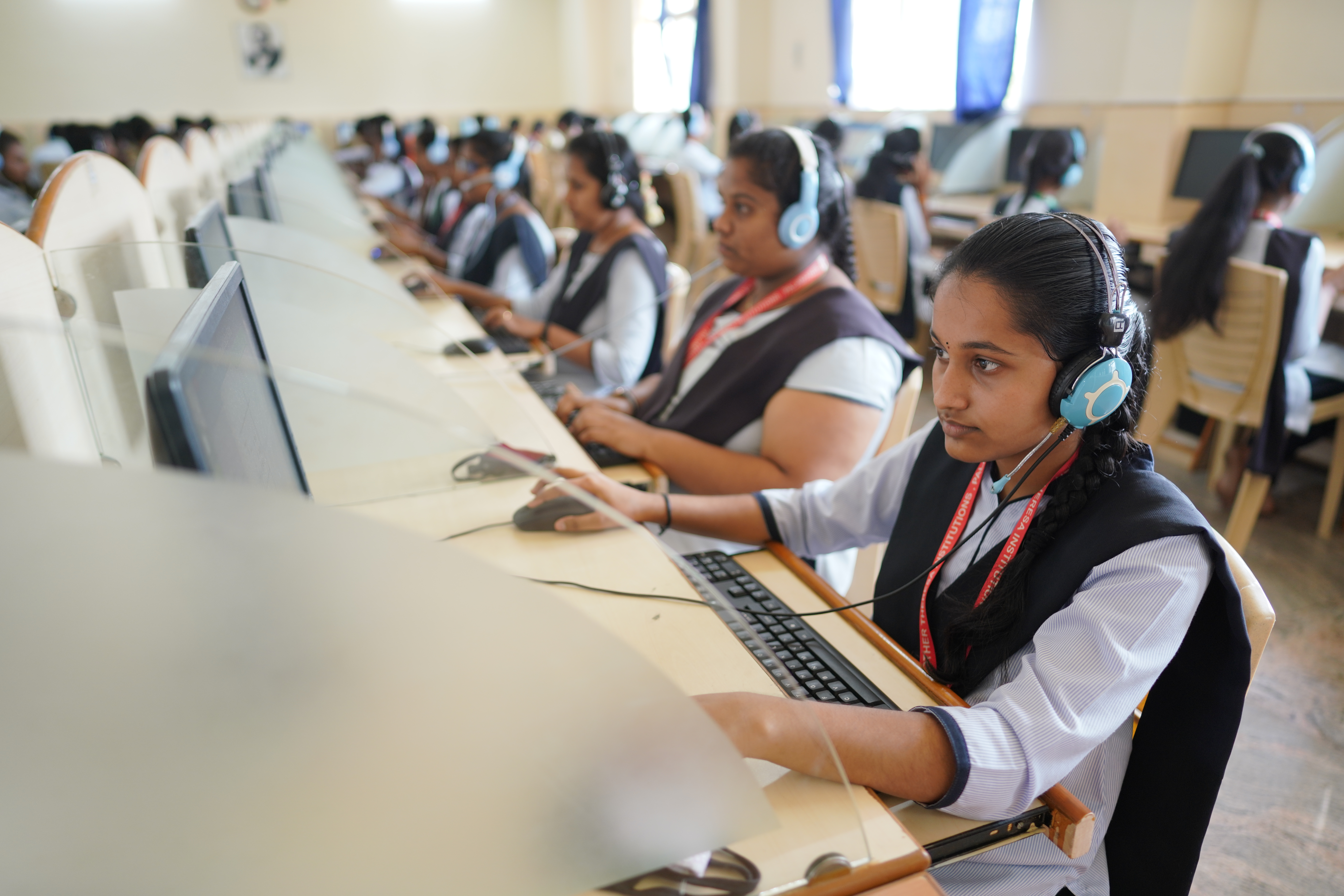
 COMMUNICATIVE ENGLISH LAB
 APPLIED / ENGINEERING PHYSICS LAB
 CHEMISTRY / ENGINEERING CHEMISTRY LAB

| E-Content | Video Link |
|---|---|
| SEM-I - Humanities subject2 | Watch Video |
| SEM-I - Humanities subject1 | Watch Video |
